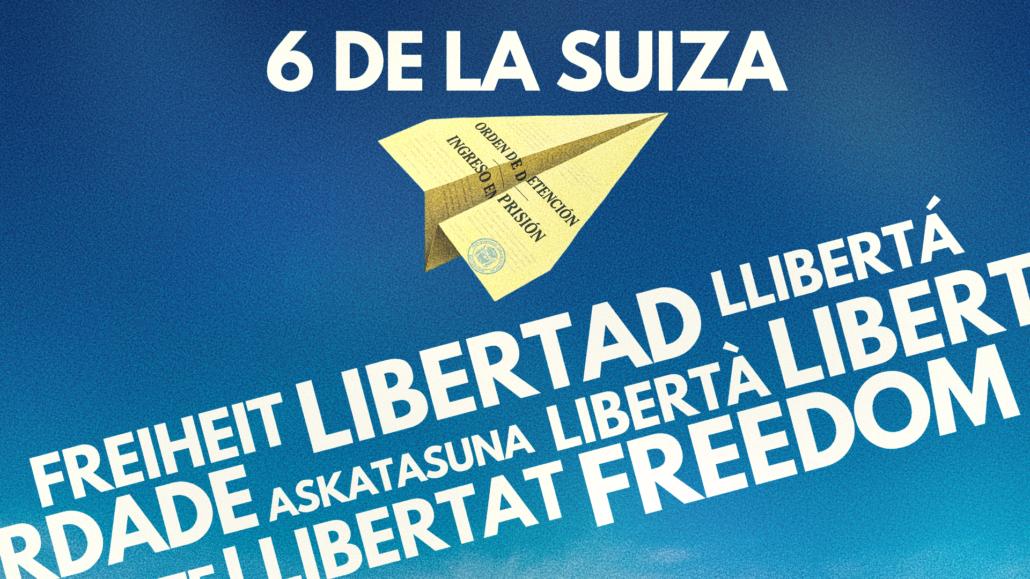
On 10 July 2025, six women from La Suiza pastry shop in Asturias entered prison. Six trade unionists convicted for their union activities.
These women were imprisoned for defending workers’ rights, for practicing workers’ solidarity. In other words, trade union activity is being condemned in its most essential aspect: the practical application of defending our interests as the working class.
This terrible attack on trade union freedom is not an isolated incident. It forms part of a repressive trend against trade unionism that causes problems, that refuses to back down but rather stands up against abuses, as happened recently with the 23 people arrested during the Cádiz metalworkers’ strike.
This dispute started in 2017, when a worker at the La Suiza pastry stop in Gijón contacted the CNT union to help her negotiate her departure from the company due to her work problems. These included excessively long working hours, a salary lower than the collective agreement and unpaid overtime; as well as having to endure abuse from her boss.
After a series of meetings in an attempt to reach a negotiated solution to the conflict, and faced with the company’s refusal to reach an agreement, the union launched a protest campaign. This involved demonstrations in front of the premises, the distribution of leaflets, and dissemination of videos denouncing the workplace harassment to which the employee was subjected. The campaign of protest demonstrations continued until the business closed.
We must bear in mind that these protest actions against the harassment of a pregnant worker by the company were officially authorised and were carried out peacefully and without incident.
But what began as a mere labour dispute, one of dozens in the hospitality and retail sector, ended up sending six union members to jail.

In January 2021, Criminal Court No. 1 of Gijón tried eight people—including the employee—for aggravated coercion and obstruction of justice. The prosecution requested two and a half years in prison for each defendant and €60,000 in damages. The owner of the business accuses them of causing the closure of his business.
In June of that year, the judge handed down the sentence: three and a half years in prison for seven of the defendants (two years for coercion and one and a half years for obstruction), and eight months for the eighth person. In addition, they were ordered to pay a total of €125,428 in compensation to the owner.
Nine months later, the Provincial Court of Asturias upheld the conviction of six of the defendants and acquitted two. In 2023, the defence filed an appeal with the Supreme Court, alleging a violation of fundamental rights.
In June 2024, the Supreme Court upheld the conviction. The Supreme Court’s ruling maintains that the protests led to the closure of the business, when in fact the premises where the pastry shop was located had been advertised on real estate websites for at least a year before the start of the dispute.
In November 2024, the defence filed an appeal for constitutional protection with the Constitutional Court, which was dismissed. With this decision, all legal avenues within the Spanish state were exhausted.
Taxi driver, waitress, stock clerk, singer, clinical assistant and teacher are the professions of the convicted women.
The family that owns the pastry shop was named in a complaint filed by a group of restaurant owners who sought to outlaw the CNT union for “extortion and illegal association.” The court determined there was no case and dismissed the complaint, a decision later upheld by the Provincial Court.
And while this long process was unfolding, the response on the street has been impressive.
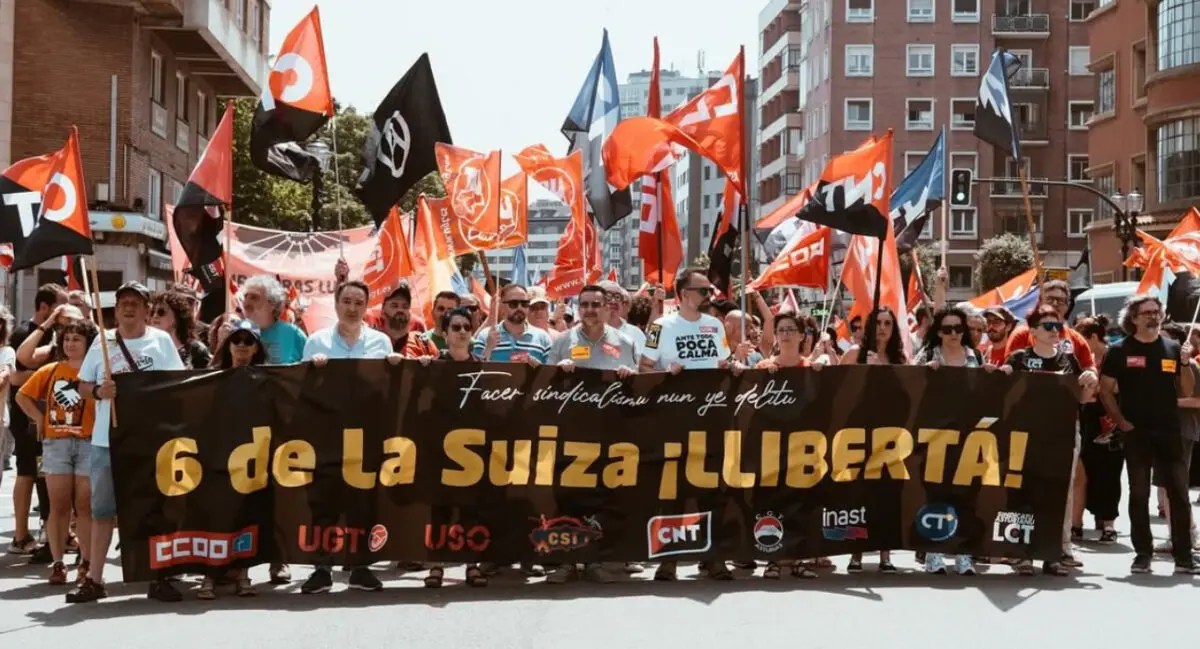
In Gijón, Madrid, and other cities, thousands of people have demonstrated under the slogan «Being a union member is not a crime.»
More than 22 unions—including CCOO, UGT, CGT, CSI, Solidaridad Obrera, SUATEA, and the CNT itself—have endorsed the request for a Pardon.
On 10 July 2025, they appeared voluntarily at the Asturias Penitentiary Centre to begin serving their sentences. They will remain in an open regime at a social reintegration centre attached to the prison.
In a statement, they affirmed: “We acted with consistency and dignity. We supported a worker in a vulnerable situation. We were doing something that is a right.”
And this was reflected in some media outlets, which pointed out that it wasn’t just six union members who went to jail, but the dignity of many, the voice of many more, and with them, a piece of our democracy.